












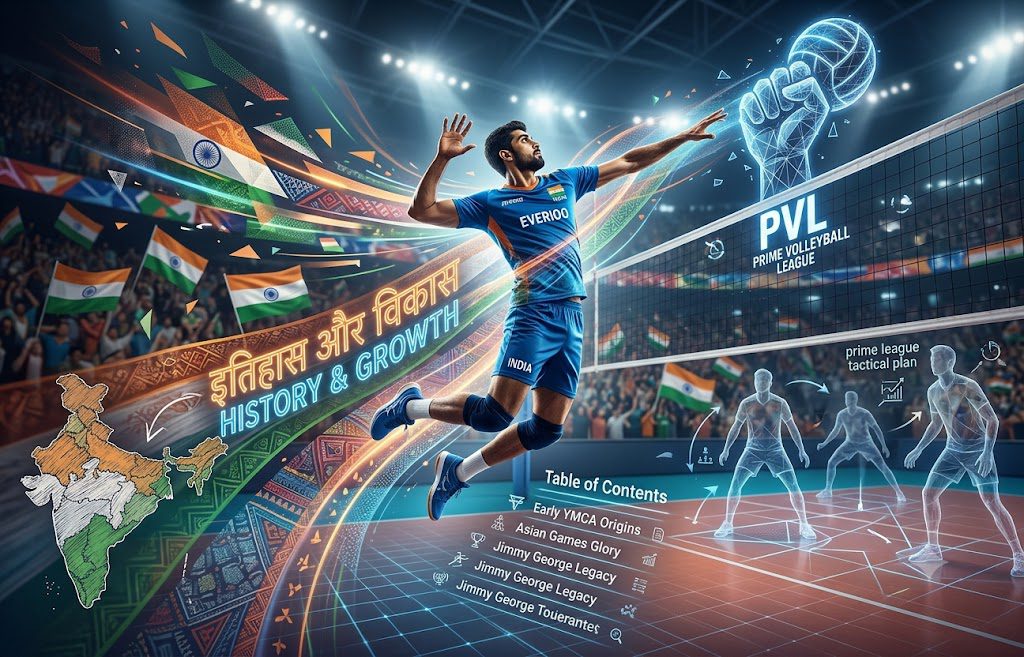
Indian Volleyball History and Growth: The Ultimate Guide to the Spiking Revolution
The Hidden Giant of Indian Sports
When global audiences think of Indian sports, the mind instantly drifts toward the massive ecosystem of cricket, the historic golden era of field hockey, or the individual Olympic brilliance found in badminton and javelin throw. However, shifting beneath the mainstream sports media coverage is a sport that possesses deep roots in both rural mud-courts and urban indoor complexes: Volleyball.
To truly understand the sporting fabric of the nation, exploring Indian volleyball history and growth reveals an incredible journey of passion, undeniable talent, structural challenges, and a modern commercial resurgence. Volleyball in India is not just a recreational past-time; it is a high-octane, strategically complex, and physically demanding sport that is rapidly capturing the attention of millions of modern sports fans.
In this extensive, deeply researched guide, we will dive into the fascinating Indian volleyball history and growth, track the journey from its early 20th-century origins to its current digital-age professionalization, introduce the legendary icons who paved the way, evaluate the massive impact of franchise leagues, and look at how digital platforms like Everioo are helping fans stay informed about the rapid development of Indian sports.
The Origins: Tracing Indian Volleyball History and Growth
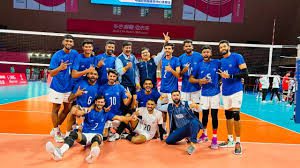
The foundational chapters of Indian volleyball history and growth date back more than a century. The sport was originally introduced to the Indian subcontinent by the Young Men’s Christian Association (YMCA) in the early 1900s. The YMCA played a critical role in spreading physical education across British India, and volleyball—requiring minimal equipment other than a net and a ball—became an instant hit in schools, colleges, and military camps.
                  [Early Milestones of Indian Volleyball]
                                    |
         +--------------------------+--------------------------+
         |                                                     |
[1951: VFI Formation]                                 [1955: First National Championship]
- Volleyball Federation of India established         - Formalized the domestic tournament circuit
- Standardized rules across states                     - Identified rural and urban talents
By the time India achieved independence in 1947, the sport had spread deep into the rural landscapes, particularly in states like Punjab, Kerala, Tamil Nadu, Andhra Pradesh, and Haryana. To give the sport a structured direction, the Volleyball Federation of India (VFI) was formed in 1951.
The establishment of the VFI was a monumental turning point in Indian volleyball history and growth, as it formalized the National Volleyball Championships, aligned local clubs with international rules, and allowed India to officially participate in global tournaments organized by the Fédération Internationale de Volleyball (FIVB).
The Golden Era: International Glory and Continental Podiums
While many modern fans believe that Indian volleyball has always operated under the shadow of other sports, historical data shows a highly competitive “Golden Era” during the mid-to-late 20th century. During this phase, India was considered one of the powerhouse teams in Asian volleyball circuits.
1. The 1958 Tokyo Asian Games Bronze
The first major international breakthrough in Indian volleyball history and growth occurred at the 1958 Asian Games in Tokyo, Japan. Displaying exceptional teamwork, tactical positioning, and raw physical power, the Indian Men’s National Team secured a historic Bronze Medal. This victory proved to the world that Indian athletes possessed the natural vertical leap and agility required to compete with elite East Asian nations.
2. The 1962 Jakarta Asian Games Silver
Building on the momentum of 1958, the Indian team traveled to Jakarta for the 1962 Asian Games. This tournament saw India play some of the most beautiful, high-tempo volleyball in its history. India pushed the absolute giants of the sport to their limits, eventually securing a magnificent Silver Medal, which remains the highest-ever podium finish for India at the Asian Games.
3. The 1986 Seoul Asian Games Bronze
After a brief period of transition, India roared back to life at the 1986 Asian Games in Seoul, South Korea. Driven by a generation of legendary players, India secured another Bronze Medal, defeating top-tier continental teams. This victory solidified the era as a core milestone in Indian volleyball history and growth.
Decoding the Legends: The Icons of Indian Volleyball
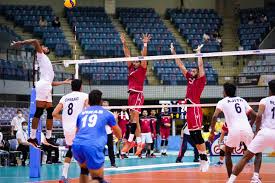
Any deep dive into Indian volleyball history and growth is incomplete without honoring the extraordinary athletes who sacrificed their lives to put Indian volleyball on the global map. These individuals became symbols of excellence, inspiring generations of young kids to pick up the ball.
Jimmy George: The Legend Who Touched the Sky
Widely regarded as one of the greatest volleyball players of all time globally, Jimmy George is a foundational pillar of Indian volleyball history and growth. Hailing from Kerala, Jimmy possessed an otherworldly vertical leap and an absolutely devastating jump-serve that terrorized international defenses.
-
The European Breakthrough: Jimmy George became the first-ever Indian volleyball player to turn professional, playing in the highly competitive Italian club league (Serie A), which was considered the NBA of volleyball at the time.
-
An Untimely Tragedy: Tragically, Jimmy passed away in a car accident in Italy in 1987 at the young age of 32. His legacy lives on, and he remains the youngest volleyball player to be honored with India’s prestigious Arjuna Award.
A. Ramana Rao: The Tactical Mastermind
Another legendary figure in Indian volleyball history and growth is A. Ramana Rao. As a player, he was known for his impeccable defensive skills and brilliant court awareness. Post-retirement, Rao transitioned into coaching and administration, becoming the first Indian volleyball coach to be honored with both the Arjuna Award and the Dronacharya Award.
Technical Analysis: Formats and Structural Differences
To fully appreciate the complexity of the sport within the country, it is important to understand the different formats in which volleyball is played across India. The structural evolution of these formats reflects the wider Indian volleyball history and growth trajectory.
| Volleyball Format | Primary Surface Used | Regional Popularity | Key Tactical Focus | Main Governing Influence |
| Indoor Volleyball | Hardwood / Polyurethane | Pan-India (National Level) | Tactical rotations, structured blocking, quick sets | FIVB / VFI Regulations |
| Shooting Volleyball | Hard Mud / Clay Courts | Punjab, Haryana, UP | Raw power, traditional heavy smashes, unique ball weight | Local Rural Committees |
| Beach Volleyball | Sand | Goa, Kerala, Tamil Nadu | High stamina, 2-player coordination, environmental adaptability | Olympic / Asian Circuits |
While international bodies focus heavily on Indoor and Beach formats, India’s rural “Shooting Volleyball” remains a massive cultural phenomenon, drawing thousands of spectators to village festivals, proving that the sport’s popularity is deeply rooted across the country.
The Modern Revolution: The Prime Volleyball League (PVL)
For many years after the late 1980s, Indian volleyball faced a stagnant phase due to administrative disputes, lack of corporate sponsorships, and minimal television broadcasting. However, the modern phase of Indian volleyball history and growth underwent a massive transformation with the launch of the RuPay Prime Volleyball League (PVL).
                    [The Prime Volleyball League Impact]
                                      |
         +----------------------------+----------------------------+
         |                                                         |
[Corporate Investment]                                   [Global Technical Standards]
- Long-term franchise ownership                          - International coaches & trainers
- Secure salaries for players                            - Fan engagement via digital media
1. Global Visibility and Franchise Model
The Prime Volleyball League introduced a highly sustainable, private-franchise model completely free from traditional bureaucratic red tape. Teams like the Ahmedabad Defenders, Calicut Heroes, Kochi Blue Spikers, and Hyderabad Black Hawks brought corporate professional Code of Conduct, high-quality kits, and dedicated fanbases to the sport.
2. International Exposure for Indian Talent
The PVL allows top-tier international players from countries like the USA, Brazil, and Colombia to play alongside young Indian athletes. This direct interaction has dramatically accelerated the Indian volleyball history and growth timeline, exposing domestic players to advanced blocking systems, modern nutritional advice, and elite psychological preparation.
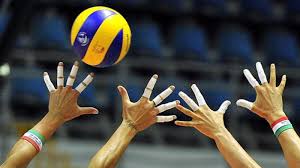
Connecting Sports Evolution to Personal Mindset
The dramatic shifts witnessed in Indian volleyball history and growth—from overcoming structural limitations to leveraging modern technology and marketing—provide brilliant lessons for personal and professional advancement. Success in any competitive landscape requires agility, strategic teamwork, and the ability to pivot when traditional pathways close down.
This is exactly where Everioo plays a vital role for our readers. As an authoritative digital hub dedicated to sports analysis, career growth, health optimization, and modern lifestyle strategies, Everioo translates athletic success into actionable real-world blueprints.
                       [Everioo Growth Ecosystem]
                                   |
         +-------------------------+-------------------------+
         |                                                   |
[Athletic Strategy Breakdown]                           [Lifestyle & Health Strategy]
- Learning agility from volleyball rotations           - Plyometric & vertical leap training
- Overcoming systemic career obstacles                 - Building high-performance team culture
Our platform is engineered to break down the highly complex training routines of elite athletes. By studying the detailed analysis of Indian volleyball history and growth on our blog, you can learn how to build high-performance teams in your corporate workspace, develop individual physical resilience through custom plyometric training guides, and manage professional challenges with the focused mindset of an international sports champion.
Challenges Facing Indian Volleyball Today
Despite the incredible excitement surrounding the Prime Volleyball League, a realistic assessment of Indian volleyball history and growth requires examining the core structural challenges that must be addressed to ensure sustainable long-term development.
1. Grassroots Infrastructure Deficit
While elite players now have access to high-tech indoor stadiums through franchise leagues, grassroots development in rural towns still relies on poorly maintained outdoor mud courts. To compete with global giants like Italy, Poland, and Brazil, India must build thousands of localized, weather-proof indoor courts equipped with proper flooring to prevent chronic knee and ankle injuries among young players.
2. Administrative Stability
For years, conflicts within national sports federations have occasionally resulted in international bodies suspending Indian participation or complicating selection processes. For the Indian volleyball history and growth trajectory to remain upward, the sport requires complete administrative transparency, modern corporate governance, and athlete-first policies.
3. Sports Science Integration
Modern volleyball is a game of millimeters and split-second decisions. It requires deep data analytics, video tracking systems, custom biomechanical analysis for jumping mechanics, and advanced sports psychology. Integrating these specialized sports science branches into local state academies is crucial for producing Olympic-level Indian spikers.
The Future: The Road Ahead for Indian Spikers
The future outlook of Indian volleyball history and growth looks incredibly bright. With the Prime Volleyball League securing long-term television broadcasting rights and international digital streaming partnerships, the financial security of players has reached an all-time high. Young kids in rural villages can now realistically view volleyball as a highly lucrative professional career path, rather than just a casual hobby.
Furthermore, India’s national teams are beginning to travel overseas for specialized exposure tours, and the national federation is actively hiring elite international coaches to guide development squads. As school sports programs across India begin to adopt indoor volleyball into their mandatory physical education curriculums, the talent pool is set to expand rapidly.