












The Absolute Dominance of Pro Kabaddi League: History, Franchise Wealth, and India’s Revolutionary Mat Phenomenon
For nearly a century, the athletic imagination of the Indian subcontinent was firmly locked inside a single, unyielding prism: cricket. Homegrown, centuries-old sports deeply rooted in the soil and cultural folklore of the country—such as Kabaddi—were cast aside as rural pastimes. They were regarded as intensely passionate displays of raw grit, yet utterly devoid of modern structural presentation, corporate backing, or global media viability.
Then came the year 2014, an inflection point that fundamentally rewrote the playbook of international sports marketing.
The structural launch of the Pro Kabaddi League by Mashal Sports, packaged for a prime-time television audience, achieved what many sports analysts deemed completely impossible. It pulled a high-intensity sport out of the dust-filled fields of rural mud bowls and deposited it directly onto high-definition, multi-colored synthetic mats inside air-conditioned metropolitan stadiums.
Today, the Pro Kabaddi League stands unchallenged as one of the most-watched, commercially lucrative, and culturally influential sporting leagues in Asia, second only to the Indian Premier League (IPL). This comprehensive, multi-layered analysis breaks down the institutional foundations, game-changing rule mechanics, superstar legacies, and financial frameworks that engineered this historic sports revolution.
1. The Historical Genesis: Rebranding a Ancient Heritage
To appreciate the staggering heights the Pro Kabaddi League has scaled, one must first dismantle the myth that Kabaddi was naturally destined for commercial success. In its traditional format, Kabaddi was a highly localized, fractured sport played with wildly varying rule sets across different states like Punjab, Maharashtra, and Tamil Nadu. While India consistently dominated the Asian Games in the late 20th century, the domestic game lacked an elite, unified platform.
+-----------------------------------------------------------------------+
|                 THE EVOLUTIONARY PIPELINE OF KABADDI                  |
+-----------------------------------------------------------------------+
|  Phase 1: Ancient Rural Pastime (Mud pits, localized unwritten rules) |
|                                 │                                     |
|                                 ▼                                     |
|  Phase 2: Asian Games Recognition (Standardized court dimensions)    |
|                                 │                                     |
|                                 ▼                                     |
|  Phase 3: The Pro Kabaddi League Era (Mats, LED lights, Prime-Time TV)|
+-----------------------------------------------------------------------+
The masterstroke of the founders of the Pro Kabaddi League lay in recognizing that the sport possessed an intrinsic, deeply cinematic quality: it was fast, intensely physical, required zero specialized equipment, and operated on a simple narrative of survival and conquest. However, the raw product needed a radical structural overhaul to survive the unforgiving landscape of prime-time satellite television.
Transitioning from Soil to Matte High-Performance Canvases
The first fundamental shift was physical. The transition from uneven mud surfaces to high-traction, shock-absorbing synthetic mats changed the entire biomechanics of the sport.
On mud, a player’s speed was limited by shifting earth underfoot, and injuries were frequent and severe. The introduction of synthetic mats in the Pro Kabaddi League allowed players to develop explosive acceleration, implement laser-sharp directional cutting, and pull off high-flying acrobatics that were previously impossible. The bright orange and blue visual aesthetic of the mats instantly elevated the sport’s broadcast quality, turning a chaotic field game into a localized, sleek gladiator arena.
2. The Tactical Masterstroke: Rule Mechanics Engineered for Drama
The core reason why the Pro Kabaddi League captured the attention of millions within its first week of broadcasting was its radical optimization of the game’s official rulebook. The traditional game could occasionally degenerate into defensive stalemates, where teams would intentionally waste time to protect a narrow point lead. The architects of the league eliminated this passivity entirely by introducing three cut-throat mechanisms:
A. The 30-Second Raid Clock
In the Pro Kabaddi League, a raider cannot wander aimlessly across the midline. The moment they cross into enemy territory, a relentless 30-second countdown begins on giant stadium LED screens. This forces the raider to make split-second analytical choices, calculate defensive gaps instantly, and execute an attack under intense psychological pressure, completely eliminating any possibility of stalling the game.
B. The “Do-or-Die” Raid Rule
This is arguably the most dramatic rule innovation ever introduced to modern sports. If a franchise plays out two consecutive “empty raids” (raids where no point is scored by either the raider or the defense), the third raid is designated as a mandatory Do-or-Die Raid.
The raider must score a point—either by touching a defender or securing a bonus point—or they are automatically declared out, and a point is gifted to the opposition. This brilliantly structured rule ensures that defensive passivity is severely punished and guarantees an intense action sequence every single minute.
C. The Super Tackle Dynamic
When a defending team is reduced to its final three defenders or fewer, they find themselves at an extreme mathematical disadvantage. To reward tactical bravery under fire, the Pro Kabaddi League introduced the Super Tackle. If these remaining three defenders successfully pin down an incoming raider, they are awarded 2 points instead of the standard 1. This keeps teams alive even when they are on the brink of an all-out, turning potentially lopsided matches into thrilling, come-from-behind victories.
3. Franchise Mapping: Analysis of the 12 Powerhouses
What began as an experimental 8-team tournament has expanded into a massive 12-franchise ecosystem covering every major geographical and economic hub of India. These franchises have evolved from corporate vanity investments into highly sophisticated, multi-million dollar sports brands boasting distinct cultural identities and passionate fan bases.
+-----------------------------------------------------------------+
|                    THE PKL FRANCHISE ECOSYSTEM                  |
+-----------------------------------------------------------------+
|  Patna Pirates         --> The Attacking Dynasty (3x Champions) |
|  U Mumba               --> The Defensive Think-Tank              |
|  Jaipur Pink Panthers  --> The Inaugural Pioneer Brand          |
|  Puneri Paltan         --> The Youth-Academy Juggernaut          |
+-----------------------------------------------------------------+
Deep-Dive Analysis of Elite Franchises
-
Patna Pirates (The Attacking Dynasty): Historically the most successful franchise in the history of the Pro Kabaddi League, the Pirates built an empire around aggressive, relentless raiding strategies. Winning three consecutive titles, they established a blueprint showing that elite raiding depth can completely break down even the most disciplined defensive defensive lines.
-
U Mumba (The Defensive Think-Tank): Representing the financial powerhouse of Mumbai, U Mumba built its early legacy on a completely opposite philosophy. Pro Kabaddi League They prioritized rock-solid defensive chains, corner-to-corner synchronization, and patient tactical play, proving that defensive stability wins championships just as effectively as flashy raids.
-
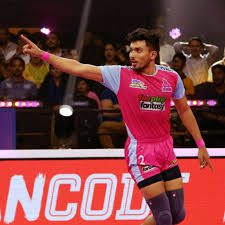
Jaipur Pink Panthers (The Inaugural Pioneers): Owned by Bollywood royalty Abhishek Bachchan, this franchise won the historic first season, legitimizing the league’s entertainment value. Pro Kabaddi League They have consistently focused on balanced rosters, avoiding reliance on a single superstar and instead focusing on complete all-round squad harmony.
-
Puneri Paltan (The Youth-Academy Juggernaut): A franchise that has set new standards for domestic sports scouting. Puneri Paltan’s success stems directly from their extensive Pro Kabaddi League state-wide academy infrastructure, bringing through hyper-athletic, tactically flexible young players who out-pace and out-endure aging league veterans.

Indian pro Kabaddi

4. Icons of the Mat: The Superstars Who Redefined the Sport
Before the inception of the Pro Kabaddi League, Kabaddi players were largely uncelebrated heroes working quiet day jobs in state corporations, railways, or police forces. The league transformed these humble, hardworking athletes into mainstream household celebrities, complete with multi-crore endorsements, massive digital followings, and global recognition.
Pardeep Narwal: “The Dubki King”
Pardeep Narwal is universally recognized as the greatest statistical phenomenon the Pro Kabaddi League has ever witnessed. His game is defined by an unparalleled invention: The Dubki.
When a wall of three or four massive defenders lunges forward to execute a waist-high block, Pardeep uses his low center of gravity to drop his torso inches from the mat, slipping underneath the defenders’ grasp like a wave, and powering through to the midline. His historic 34-point single-match performance remains an untouched gold standard of raiding excellence.
Pawan Sehrawat: “The Hi-Flyer”
If Pardeep owns the floor, Pawan Sehrawat completely dominates the air. Blessed with an astonishing vertical leap, Pawan’s signature move involves launching his entire body cleanly over a standing chain of defenders, executing a mid-air somersault, and landing safely across the half-way line. His explosive acceleration and supreme upper-body strength have made him the most financially coveted player in the history of the annual player auctions.
Fazel Atrachali: “The Sultan of the Corner”
Hailing from the historic wrestling belts of Iran, Fazel Atrachali shattered the long-standing belief that only Indian-born players could master the complex inner dynamics of the Pro Kabaddi League. As a left-corner defender, Fazel brought an unprecedented level of physical intimidation to the mat. His vicious ankle holds, perfectly timed iron dashes, and commanding on-court leadership have earned him multiple Best Defender awards, making him a true legend of the global game.
5. The Financial Engineering: Packaging a Premium Sports Product
The spectacular rise of the Pro Kabaddi League is heavily studied in global sports management institutes as a flawless example of market creation. Many competing leagues launched in India around the same time—covering sports like tennis, field hockey, and badminton—failed to find a sustainable audience and faded into financial insolvency. Why did Kabaddi succeed where others collapsed?
+-----------------------------------------------------------------+
|                    THE PKL MONETIZATION ENGINE                  |
+-----------------------------------------------------------------+
|  [HIGH BGP DENSITY]     --> Massive stadium crowd in close setups|
|  [REGIONAL BROADCASTS]  --> Deep penetration via vernacular commentary|
|  [LOW CAPEX]            --> Minimal space & gear costs for owners |
+-----------------------------------------------------------------+
The Media Packaging Masterclass
Mashal Sports, alongside majority stakeholder Star Sports, realized that the modern sports consumer craves compact, high-intensity storytelling. A standard Pro Kabaddi League match lasts exactly 40 minutes (two halves of 20 minutes each). This lightning-fast format fits perfectly within a crisp, one-hour television broadcast window, leaving zero room for fluff, long commercial breaks, or audience fatigue.
The broadcast production values were scaled up significantly:
-
Ultra-Slow-Motion Impact Tracking: High-speed cameras capture the exact moment an ankle lock snaps shut, showing the intense muscle tension and tactical strain of the athletes.
-
Advanced Mat Analytics: Metrics like Raid Success Percentage, Average Raid Points, and Tackle Efficiency were created out of thin air, giving fans a deeply technical, analytical vocabulary to discuss the sport on social media.
-
The Hyper-Local Vernacular Push: The league did not restrict itself to English commentary. By launching high-energy, localized broadcasts in Hindi, Tamil, Telugu, and Kannada, they unlocked the massive consumer bases of tier-2 and tier-3 Indian cities, capturing an audience base that traditional metros had long ignored.
Low Operational Capital Expenditures (CAPEX)
For franchise owners, the Pro Kabaddi League represents a highly efficient financial investment. Unlike soccer, cricket, or motorsports, which require sprawling grass pitches, multi-acre stadiums, or incredibly expensive technology infrastructure, a elite-grade Kabaddi ecosystem can be assembled inside any standard indoor basketball or badminton arena. This structural efficiency keeps overhead costs remarkably low, allowing franchises to achieve operational profitability far faster than teams in other global sports leagues.
6. The Scientific Transformation: High-Performance Training and Nutrition
In its pre-league avatar, Kabaddi training consisted almost entirely of basic endurance running, localized wrestling drills, and traditional bodyweight exercises in mud pits. The modern Pro Kabaddi League has completely institutionalized the training of these athletes, introducing elite sports science, customized medical data mapping, and precise nutritional architecture.
+---------------------------------------------------------------------+
|                     THE MODERN PKL TRAINING RIG                     |
+---------------------------------------------------------------------+
|  * Plyometrics & Power Lifting: Maximizes vertical leap and dash speed|
|  * Specialized Neuro-Tracking: Enhances reflex response to tackles  |
|  * Cold-Plunge Cryotherapy: Accelerates muscle fiber recovery       |
+---------------------------------------------------------------------+
High-Velocity Biomechanics
The demands of a modern 40-minute match are physically punishing. A corner defender must withstand the impact of a 90kg raider colliding with them at full sprint, while a raider must possess the explosive power to drag three massive defenders across a high-friction mat.
To build these modern gladiators, team training camps now utilize:
-
Velocity-Based Weight Training: Focusing on building explosive power rather than pure bodybuilder bulk, ensuring players maintain their agility.
-
Plyometric Jump Arrays: Specifically designed for raiders to increase their clearance height during lion jumps and escapes.
-
Reactive Agility Drills: Utilizing advanced light-pod setups to train a defender’s peripheral vision and minimize reaction times down to milliseconds.
Indian pro Kabaddi
Structural Nutritional Overhauls
The traditional, carbohydrate-heavy dairy diet of classic Indian wrestlers has been replaced with meticulously calculated macronutrient profiles. Every gram of protein, fat, Pro Kabaddi League and carbohydrate consumed by a player is mapped against their total playing time and position. Corner defenders consume specific caloric profiles to build dense, immovable muscle mass, while fast, agile raiders are kept on highly specialized diets designed to maximize lean muscle mass and fat burning.
7. The Global Pipeline and Grassroot Scouting Frameworks
The long-term sustainability of any professional sports league is inherently dependent on its talent pipeline. If a league relies solely on its aging inaugural stars, the on-court product quickly stagnates. The Pro Kabaddi League solved this problem by engineering a brilliant nationwide talent identification network.
The Future Kabaddi Heroes (FKH) Initiative
The FKH program is the undisputed crown jewel of the league’s development system. Every single year, a specialized group of elite coaches and sports scientists conduct massive open tryouts across dozens of cities in India.
+-----------------------------------------------------------------+
|                   THE TALENT SCOUTING FUNNEL                    |
+-----------------------------------------------------------------+
|  Open District Level Trials (Thousands of hopeful rural youth)  |
|                               │                                 |
|                               ▼                                 |
|  Shortlisted Elite Camps (Intense scientific fitness testing)  |
|                               │                                 |
|                               ▼                                 |
|  The Main PKL Player Auction (Direct entry into pro rosters)     |
+-----------------------------------------------------------------+
Young players Pro Kabaddi League from distant villages, many of whom have never seen a synthetic mat, are put through exhaustive physical, medical, and psychological tests. The standout talents are placed into specialized high-performance development camps, given professional stipends, and directly entered into the main player auction pool as “New Young Players” (NYPs). This ensures an endless stream of hungry, elite young talent that keeps the league’s competitive balance highly unpredictable.
Internationalizing the Sport
The commercial success of the league has had an incredible cascading effect globally. Nations like Iran, South Korea, Japan, Kenya, and Sri Lanka have built dedicated national programs specifically to train their athletes for the Pro Kabaddi League auctions. The inclusion of these foreign stars has transformed the tournament from a domestic competition into a global melting pot of athletic styles, laying a rock-solid foundation for Kabaddi’s eventual push for inclusion in the Olympic Games.