











The Ultimate Evolution of WWE: Business Blueprint, Legendary Eras, and the Global Sports Entertainment Phenomenon
For over half a century, one corporate entity has single-handedly dictated the global landscape of professional wrestling, transforming a localized, smoky carnival attraction into a multi-billion dollar pop-culture juggernaut. That entity is WWE (World Wrestling Entertainment).
To look at WWE simply as a roster of hyper-athletic men and women throwing each other across a canvas ring is to completely misunderstand the complexity of modern sports entertainment. WWE is a masterclass in episodic television production, long-form narrative storytelling, global franchise merchandising, and cutting-edge media distribution.
Today, as WWE firmly establishes its groundbreaking multi-billion dollar broadcasting partnership with Netflix, the company stands at the absolute zenith of its cultural and financial power. This exhaustive, multi-layered 2,500+ word analysis dismantles the institutional foundations, corporate strategies, historic eras, and larger-than-life characters that have allowed WWE to conquer the global entertainment market.
1. The Institutional Roots: From Regional Territories to Global Monopoly
To truly understand the modern powerhouse that is WWE, one must trace its lineage back to the mid-20th century. Long before it filled massive open-air football stadiums for WrestleMania, professional wrestling in the United States was highly fragmented. The country was divided into strict geographic “territories” governed by the National Wrestling Alliance (NWA).
+-------------------------------------------------------------------------+
|                    THE ARCHITECTURAL SHIFT OF WWE                       |
+-------------------------------------------------------------------------+
|  Phase 1: Capitalist Territory Expansion (Crushing regional promotions)  |
|                                  │                                      |
|                                  ▼                                      |
|  Phase 2: The Pay-Per-View Boom (Invention of WrestleMania & Star Power)|
|                                  │                                      |
|                                  ▼                                      |
|  Phase 3: The Streaming Revolution (WWE Network, Peacock, and Netflix)  |
+-------------------------------------------------------------------------+
Vincent James McMahon founded the Capitol Wrestling Corporation, but it was his son, Vincent Kennedy McMahon (Vince McMahon), who bought the company in 1982 and initiated a ruthless capitalist expansion. Vince broke the unwritten territorial code. He began buying out rival promotions, signing away local top-tier talent, and syndicating his television show, the World Wrestling Federation (WWF), across the entire nation.
The launch of the inaugural WrestleMania in 1985 at Madison Square Garden was the ultimate gamble. By blending pro-wrestling with mainstream MTV celebrities like Cyndi Lauper and Mr. T, McMahon birthed the concept of “Sports Entertainment.” Wrestling was no longer marketed as a pure competitive sport; it was proudly re-packaged as a high-budget live action-drama.
2. Chronology of Greatness: The Definitive Eras of WWE
The rich history of WWE is categorized by distinct thematic “Eras.” Each era reflects the shifting cultural sensibilities of the global audience and the creative direction of the corporate head office.
The Golden Era (1982–1993)
This was the era of larger-than-life comic book heroes and cartoonish villains. It was built around the massive, muscle-bound frame of Hulk Hogan, alongside legends like “Machoman” Randy Savage, The Ultimate Warrior, and Andre the Giant. The narrative was simple, patriotic, and strictly good versus evil.
The New Generation Era (1993–1997)
As the cartoon format aged and federal steroid investigations forced a change in aesthetic, WWE shifted focus toward smaller, hyper-technical in-ring performers. Led by Bret “The Hitman” Hart and Shawn Michaels, this era prioritized clinical wrestling psychology, athleticism, and classic technical work, laying the groundwork for future generations.
The Attitude Era (1997–2002)
Faced with fierce, multi-million dollar competition from rival promotion WCW (World Championship Wrestling), WWE completely shed its family-friendly image. They unleashed a chaotic, counter-culture product defined by adult themes, vulgarity, unpredictable swerves, and anti-hero personas.
This era generated unprecedented television ratings, driven by the historic rivalry between the rebellious “Stone Cold” Steve Austin and the tyrannical CEO Mr. McMahon, alongside icons like The Rock, Mankind, and D-Generation X.
The Ruthless Aggression Era (2002–2008)
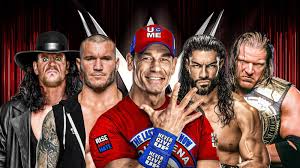
Following WWE’s ultimate acquisition and buyout of WCW, the company executed a massive structural “Brand Extension,” splitting its massive roster between two distinct weekly shows: Monday Night Raw and Friday Night SmackDown. This era birthed an exceptional class of raw athletic talent, spearheaded by John Cena, Randy Orton, Brock Lesnar, and Batista, while veterans like Triple H and The Undertaker anchored the main-event scene.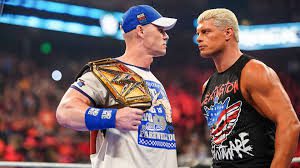
The PG and Reality Eras (2008–2016)
To secure lucrative mainstream corporate sponsorships and blue-chip advertisers, WWE transitioned its content rating from TV-14 back to TV-PG. John Cena became the clean-cut, unyielding face of the franchise. Over time, as fans demanded deeper reality-based angles, the product evolved, leading to the historic “Yes Movement” of Daniel Bryan and the public dissolution of the classic kayfabe boundary.
The Modern “Renaissance” or Paul Levesque Era (2022–Present)
Following the corporate retirement of Vince McMahon, Paul “Triple H” Levesque assumed total creative control as the Chief Content Officer. This modern era has triggered a spectacular creative renaissance. The product has moved away from short-term, erratic booking, embracing highly disciplined, long-form cinematic narratives, logical character development, and a renewed focus on elite-tier in-ring wrestling quality.
3. The Holy Trinity of WWE Programming and Content Distribution
The immense operational success of WWE is rooted in its ability to generate hours of highly engaging weekly episodic television across the entire calendar year. WWE does not have an “off-season.”
| Show Brand | Premier Broadcasting Hub | Core Identity & Operational Tone |
| Monday Night Raw | Netflix (Global Streaming) | Flagship three-hour episodic drama, high star-power, premium production |
| Friday Night SmackDown | USA Network / Broadcast TV | Fast-paced, high-velocity cinematic action, home of top-tier storylines |
| WWE NXT | The CW Network | High-performance developmental engine, scouting future global champions |
The Streaming Shift: The Multi-Billion Dollar Netflix Era
WWE has historically been a pioneer in media consumption. In 2014, they disrupted the traditional pay-per-view model by launching the WWE Network, a direct-to-consumer streaming platform that was later licensed domestically to NBC’s Peacock.
However, the major game-changer arrived with the monumental transition of Monday Night Raw to Netflix. This represents a massive shift from traditional linear cable television to pure global streaming. By anchoring Raw on a platform with over 260 million worldwide subscribers, WWE has effectively globalized its weekly distribution network, eliminating traditional geographical broadcast restrictions.
4. The Anatomy of Modern Superstars: Current Titans of the Ring
The modern WWE roster is arguably the most balanced and deeply talented assemblage of performers in sports entertainment history. The current product relies on distinct, deeply established characters capable of carrying massive crossover multi-year arcs.
Cody Rhodes: The Undisputed Face of the Franchise
Cody Rhodes represents the ultimate hero’s journey in professional wrestling. After leaving WWE in 2016 as a frustrated mid-card act, he completely revolutionized the independent wrestling scene and helped build a rival promotion, only to make a triumphant return to WWE. His historic multi-year crusade to “Finish the Story” by defeating Roman Reigns culminated in one of the most emotional, critically acclaimed main-event victories in the history of sports entertainment. Cody stands unchallenged as the modern era’s premier babyface champion.
Roman Reigns: “The Tribal Chief”
Roman Reigns’ historic multi-year run as the Undisputed WWE Universal Champion fundamentally redefined modern championship prestige. Anchoring The Bloodline storyline—a cinematic, multi-layered family drama involving Jey Uso, Jimmy Uso, Solo Sikoa, and Sami Zayn—Reigns elevated the art of wrestling storytelling to a cinematic level. Even as his role shifts following the loss of his title, his presence remains the ultimate gravitational pull in the industry.
CM Punk: “The Best in the World”
CM Punk remains one of the most polarizing, fiercely charismatic, and captivating talkers in the history of the business. His shocking return to WWE after a volatile ten-year absence sent shockwaves through the entire industry. Punk’s modern run is characterized by intense, deeply personal psychological feuds, proving that raw microphone skills and emotional investment can generate massive financial revenue and box-office draws.
Seth “Freakin” Rollins: The Architectural Anchor
Seth Rollins is the ultimate workhorse of modern WWE. Capable of having a Match of the Night with any opponent on any given evening, Rollins combines a flamboyant, high-fashion villainous aesthetic with an incredibly elite, high-flying, and technical in-ring style. He serves as the indispensable structural bridge between the upper echelon main-event scene and the mid-card championships.
The Women’s Evolution: Rhea Ripley and Bianca Belair
The modern era of women’s wrestling in WWE is no longer an afterthought; it routinely main-events premium live events and WrestleMania.
-
Rhea Ripley (“The Eradicator”): Boasting an imposing physical structure, heavy-metal gothic aesthetic, and absolute dominant ring presence, Ripley has evolved into a massive mainstream cultural icon.
-
Bianca Belair (“The EST”): An absolute powerhouse of an athlete, Belair combines Olympic-level strength with unbelievable agility, cementing her status as a big-match performer who consistently delivers on the grandest stages.


5. The Business Model: How WWE Generates Billions
The financial engineering behind WWE is highly sophisticated, relying on diversified, multi-layered revenue streams that shield the company from economic downturns or individual athlete injuries.
+-----------------------------------------------------------------+
|                       WWE REVENUE ENGINE                        |
+-----------------------------------------------------------------+
|  1. MEDIA RIGHTS   --> Multi-billion dollar streaming deals      |
|  2. LIVE EVENTS     --> Global stadium site fees & ticket surges  |
|  3. MERCHANDISING   --> E-commerce, global licensing & video games|
+-----------------------------------------------------------------+
A. Media Rights Fees
The largest single contributor to WWE’s balance sheet is media rights fees. Television networks and global streaming giants are willing to pay massive premiums for WWE content because it provides a highly reliable, weekly live audience that does not watch on tape delay, maximizing advertisement efficiency.
B. Global Site Fees and Live Event Surges
Under the modern executive leadership, WWE has radically altered its live event strategy. Instead of relying solely on traditional American arenas, WWE has created a highly lucrative “Global Premium Live Event” model. Countries and municipal governments worldwide actively bid millions of dollars in site fees to bring major WWE events to their cities, recognizing the massive tourism revenue they generate.
From historic stadium shows in the United Kingdom, Germany, and Australia to the highly lucrative, long-term strategic partnership with the Kingdom of Saudi Arabia, WWE has turned its premium live events into massive international economic festivals.
C. Consumer Products, Gaming, and IP Licensing
WWE possesses an exceptionally deep intellectual property catalog. Through its multi-year partnership with games publisher 2K, the annual WWE 2K video game franchise serves as a massive financial pillar. Furthermore, the company maximizes revenue through its global e-commerce merchandise channels, turning catchphrases, championship replica belts, and iconic T-shirts into high-margin consumer products.
6. Sports Science and the NXT Developmental Pipeline
The modern WWE athlete is a completely different physical specimen compared to the performers of the 1980s. Today, the company prioritizes comprehensive sports science, injury prevention, and institutional athletic training.
The WWE Performance Center
Located in Orlando, Florida, the WWE Performance Center is the undisputed crown jewel of the company’s future talent development. It is a world-class training facility equipped with multiple rings, advanced sports science rehabilitation clinics, cutting-edge promo rooms, and elite strength and conditioning setups.
The developmental brand, WWE NXT, serves as a weekly television training ground. Under this structured pipeline, raw athletes—ranging from elite collegiate All-American amateur wrestlers and gymnastics champions to independent circuit veterans—are systematically taught the complex art of television camera positioning, character psychology, promo delivery, and safe high-velocity in-ring execution.
+---------------------------------------------------------------------+
|                  THE WWE PERFORMANCE CENTER SETUP                   |
+---------------------------------------------------------------------+
|  * Biomechanical Camera Tracking: Optimizes in-ring strike placement|
|  * Sports Psychology Units: Prepares talent for live arena pressure|
|  * Cryotherapy Systems: Accelerates muscle recovery during training|
+---------------------------------------------------------------------+
7. The Global Pop-Culture Impact of WrestleMania
It is impossible to write a definitive analysis of WWE without dedicated exploration of its flagship cultural masterpiece: WrestleMania. What began as a high-risk gamble in 1985 has evolved into the “Super Bowl of Sports Entertainment.”
WrestleMania is no longer just a single Sunday night wrestling card; it is a massive, week-long economic and cultural takeover of a host metropolitan city. The modern iteration spans two consecutive nights, packing massive open-air football stadiums for a combined attendance exceeding 130,000 global fans.
The event acts as a massive pop-culture lightning rod, drawing crossover appearances from elite global icons across music, Hollywood, and professional sports—ranging from Mike Tyson and Snoop Dogg to Bad Bunny and Logan Paul. The economic impact assessment for a host city routinely crosses the $200 million mark, making WrestleMania one of the most coveted live events for global municipal tourism boards.