













From Farm to Table: Exploring Seasonal Eating
We have all been there. You buy a strawberry in the middle of January. It looks red and perfect. You bite into it, and… nothing. It’s white inside, sour, and crunchy. Now, compare that to a strawberry you buy in June from a roadside stand—soft, juicy, and exploding with sweetness.
That difference isn’t an accident. That is the power of Seasonal Eating.
In our modern world, we can buy any fruit, any time of year. But just because we can, doesn’t mean we should. Eating “Farm to Table” isn’t just a fancy restaurant trend; it is a return to how our bodies were designed to be fueled.
Why “In-Season” Matters
When you see a bin of “Fresh Peaches” at the grocery store in December, those peaches likely traveled thousands of miles (often from South America) to get to you. To survive the trip, they were picked weeks before they were ripe.
Eating seasonally means eating food that was harvested at its peak. Here is why it changes everything:
1. Flavor (Chemistry, not Magic)
Fruits and vegetables get their flavor from the sun. When a plant is allowed to fully ripen on the vine, its chemical makeup changes. Sugars develop, and acids balance out. A grapefruit picked green and gassed with ethylene to turn pink will never taste as good as a grapefruit that ripened on the tree in Florida or California.
2. Nutrient Density
As soon as a fruit is picked, its nutrients start to degrade. Vitamin C, specifically, is very unstable. Spinach can lose 50% of its folate within a week of harvest. By eating local, seasonal produce, you are minimizing the time between the dirt and your dinner plate, maximizing the vitamins you actually absorb.
3. It Saves You Money
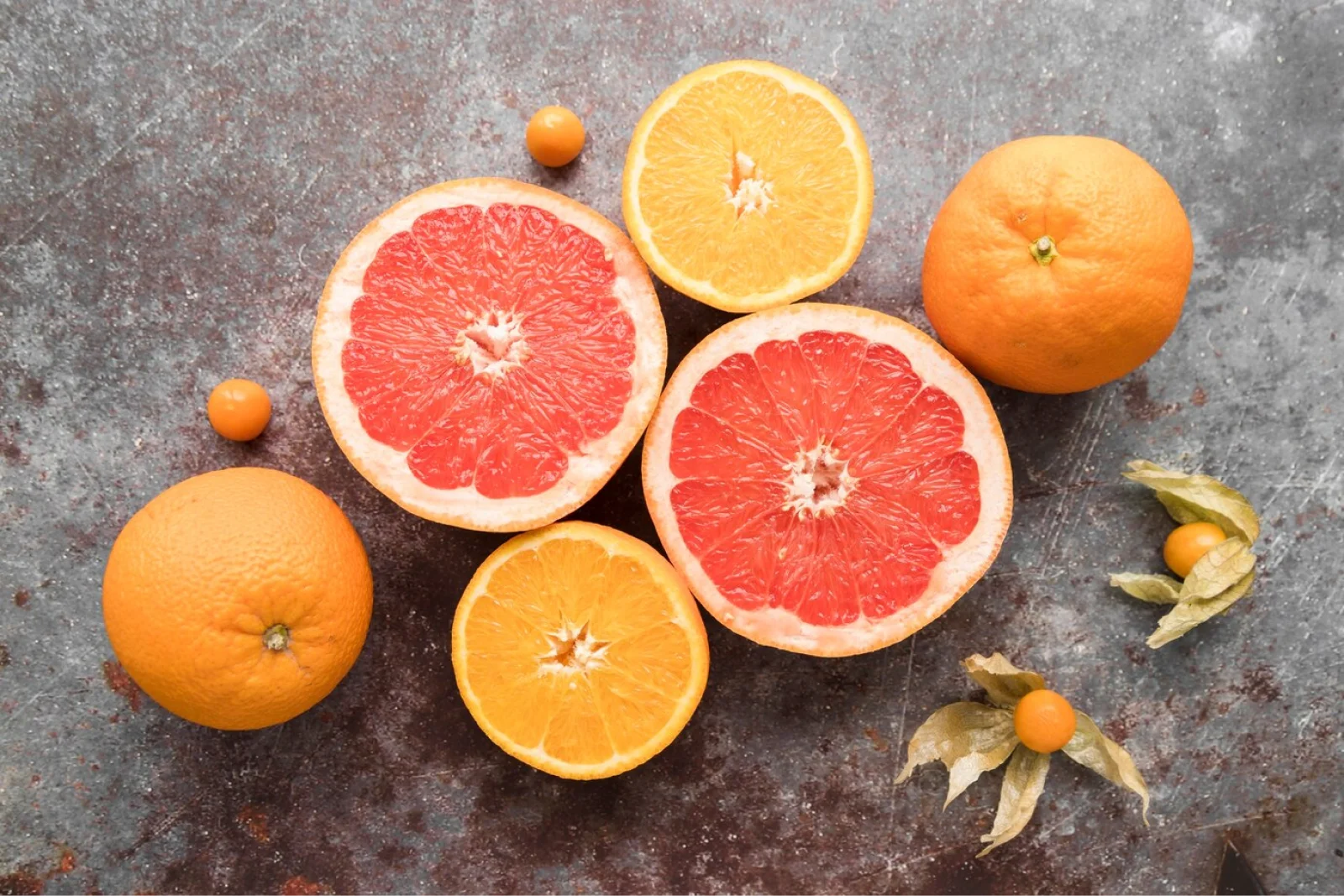
Supply and demand is simple math. When citrus is in season (like in the photo above), there is an abundance of it. Prices drop. Buying blueberries in winter is expensive because you are paying for the jet fuel to fly them there. Buying them in summer is dirt cheap.
The Winter Superstars: Citrus
Look at the image above. This is nature’s way of helping us survive the cold. Just when cold and flu season hits the US, nature provides us with Citrus—Grapefruits, Blood Oranges, Navel Oranges, and Kumquats.
These fruits are packed with:
-
Vitamin C: Immune support.
-
Fiber: Gut health.
-
Flavonoids: Powerful antioxidants that reduce inflammation.
Pro Tip: Don’t just juice them. Eat the flesh. The white pith (the stringy stuff) contains as much vitamin C as the fruit itself.
How to Start Eating Seasonally
You don’t need a farm to eat farm-to-table.
-
Read the Labels: Look at the sticker on your produce. If you live in New York and the apple says “Product of New Zealand,” it’s not seasonal.
-
Visit a Farmers Market: This is the cheat code. Farmers only sell what is growing right now. If they are selling kale and root vegetables, that’s what you should be cooking.
-
Join a CSA: Community Supported Agriculture (CSA) allows you to subscribe to a local farm. You get a box of whatever they harvested that week. It forces you to get creative with new ingredients.
The Takeaway
Food is information. When you eat with the seasons, you are giving your body the right information at the right time. So, put down the January strawberry. Grab a seasonal Blood Orange or a Ruby Red Grapefruit instead. Your tastebuds will thank you.