











Understanding the Modern American Political System: A Complete Guide for 2026
Introduction
The American Political System is one of the most influential democratic systems in the world. It affects national laws, economic policies, global diplomacy, and the everyday lives of millions of people. In 2026, understanding how the system works is more important than ever because political decisions continue shaping the future of America.
The American Political System operates through a constitutional framework that separates powers between different branches. This structure is designed to prevent excessive concentration of authority while ensuring accountability.
From presidential elections to congressional debates, the American Political System impacts everything from taxes and healthcare to education and national security.
This complete guide explains how the system functions, the role of political parties, the importance of elections, and the major challenges facing American democracy today.
The Foundation of the American Political System
The American Political System is based on the United States Constitution, which was established to create a balanced government structure. The Constitution defines the powers and responsibilities of federal institutions while protecting citizens’ rights.
The government is divided into three branches:
- Executive Branch
- Legislative Branch
- Judicial Branch
This separation of powers creates a system of checks and balances that prevents any single branch from becoming too powerful.
Key Constitutional Principles
- Democracy
- Federalism
- Separation of powers
- Checks and balances
- Individual freedoms
- Rule of law
These principles remain central to American democracy.
The Executive Branch and Presidential Powers
The Executive Branch is led by the President of the United States. The president serves as both head of state and head of government.
The president is responsible for enforcing laws, directing federal agencies, and representing the country internationally. Presidential decisions can influence economic policy, military strategy, healthcare reforms, and foreign diplomacy.
Major Responsibilities of the President
- Signing or vetoing legislation
- Leading the military as Commander-in-Chief
- Managing foreign relations
- Appointing federal judges
- Overseeing executive agencies
- Responding to national emergencies
Presidential elections are held every four years, making them one of the most significant events in American politics.
The Legislative Branch and Congress
Congress forms the Legislative Branch of the American Political System. It consists of two chambers:
- The Senate
- The House of Representatives
Congress is responsible for creating federal laws, approving budgets, and overseeing government operations.
The Senate
The Senate has 100 members, with each state represented equally by two senators. Senators serve six-year terms.
The House of Representatives
The House includes representatives based on state population sizes. Members serve two-year terms.
Responsibilities of Congress
- Passing legislation
- Approving federal budgets
- Declaring war
- Conducting investigations
- Confirming presidential appointments
Congressional debates often shape the nation’s political direction.
The Judicial Branch and the Supreme Court
The Judicial Branch interprets laws and ensures they align with the Constitution. The Supreme Court is the highest court in the United States.
Supreme Court decisions can significantly influence American society by addressing constitutional questions related to civil rights, healthcare, education, and government authority.
Key Functions of the Supreme Court
- Interpreting constitutional law
- Reviewing lower court decisions
- Protecting civil liberties
- Resolving legal disputes between states
Federal judges are appointed for life, which helps maintain judicial independence.
Political Parties in America
Political parties play a major role in the American Political System. The two dominant parties are:
- Democratic Party
- Republican Party
These parties often have different approaches to economic policy, healthcare, taxation, climate policy, and government regulation.
Democratic Party Priorities
- Expanded healthcare access
- Climate initiatives
- Social welfare programs
- Education funding
Republican Party Priorities
- Lower taxes
- Reduced government regulation
- Strong border security
- Business growth policies
Independent and third-party candidates also participate in elections, although the two-party system remains dominant.
Elections and Voting in America
Elections are a fundamental part of democracy in the United States. Citizens vote for presidents, senators, representatives, governors, and local officials.
The Electoral College system is used during presidential elections. Candidates must secure enough electoral votes to win the presidency.
Types of Elections
- Presidential elections
- Midterm elections
- State elections
- Local elections
- Primary elections
Voting rights and election security remain important political discussions in 2026.
The Role of Media in Politics
Media organizations strongly influence public opinion and political awareness. Television networks, digital news platforms, podcasts, and social media all contribute to political communication.
Modern political campaigns rely heavily on digital marketing and online engagement.
Media’s Influence on Politics
- Political advertising
- Debate coverage
- Election analysis
- Public opinion shaping
- Investigative journalism
The rise of social media has transformed how politicians communicate with voters.
Economic Policy and Government Spending
Economic policy remains one of the most important areas of the American Political System. Government leaders debate taxation, public spending, labor laws, and trade agreements.
Economic conditions often influence election outcomes because they directly affect employment, wages, and consumer confidence.
Economic Policy Areas
- Tax reform
- Inflation management
- Employment growth
- Infrastructure spending
- Trade agreements
- National debt reduction
Strong economic performance is often linked to political popularity.
Immigration and National Security
Immigration policy is a major political topic in the United States. Political leaders continue debating border security, visa systems, refugee programs, and citizenship pathways.
National security also includes military readiness, cybersecurity, and counterterrorism strategies.
Major National Security Topics
- Border protection
- Cybersecurity defense
- Military modernization
- Intelligence operations
- International cooperation
Immigration discussions frequently shape national political campaigns.
Education and Healthcare Policies
Education and healthcare are central political priorities because they impact long-term national development.
Healthcare debates focus on insurance affordability, prescription drug prices, and medical access.
Education discussions include school funding, student debt, teacher support, and higher education accessibility.
Education Policy Priorities
- Affordable college education
- Public school improvements
- Student loan reform
- Workforce development
Healthcare Priorities
- Affordable medical coverage
- Mental health support
- Rural healthcare access
- Prescription cost reduction
These issues strongly influence voter decisions.
Challenges Facing American Democracy
The American Political System faces several modern challenges. Political polarization, misinformation, economic inequality, and declining public trust are major concerns.
Many citizens believe leaders should focus more on bipartisan cooperation and practical policymaking.
Major Democratic Challenges
- Political division
- Misinformation online
- Election security concerns
- Economic inequality
- Public trust in institutions
Addressing these challenges will be important for maintaining democratic stability.
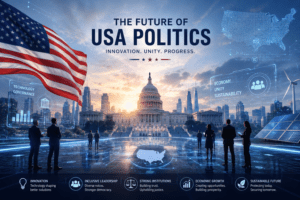
The Future of the American Political System
The future of American politics will depend on technological innovation, voter participation, leadership quality, and policy effectiveness.
Young voters are becoming increasingly active in political discussions, influencing campaign strategies and national priorities.
Technology, artificial intelligence, and digital communication are also changing how political systems operate.
Future Political Trends
- Increased digital campaigning
- AI policy discussions
- Greater youth participation
- Expanded cybersecurity protections
- Evolving economic strategies
The American Political System will continue adapting to social and technological changes.